

 English
 Español
Content
- 1 What Are EV Motor Housing Materials?
- 2 Why Aluminum Wins the EV Traction Motor Housing
- 3 Where Steel Motor Housings Beat Aluminum on Total Cost
- 4 304 Stainless Steel Housings for Coolant and Corrosion
- 5 EV Motor Housing Materials: Quick Comparison and Selection Checklist
- 6 FAQ: EV Motor Housing Materials
A teardown of nearly every volume battery-electric vehicle tells the same story twice: the traction motor is wrapped in die-cast aluminum, while the coolant pump, cooling fan and HVAC blower beside it are just as likely to wear welded steel. Both choices are correct, and both answer one question: which EV motor housing materials pay for themselves in a given duty cycle? Answer it carelessly and the bill arrives later as excess mass, corrosion warranty claims, or a housing cost that cannot survive procurement negotiation. This guide compares the metals that matter, with the numbers engineering and purchasing teams actually argue about.
Aluminum moves heat two to three times better than carbon steel, yet steel still carries a large share of EV auxiliary motors, because stiffness, unit cost and corrosion strategy decide as many housing programs as physics does.
What Are EV Motor Housing Materials?
EV motor housing materials are the structural metals used to build a motor's outer shell: the component that clamps the stator stack, locates the bearings, drains winding heat to coolant or ambient air, and shields the windings from water, salt, dust and road debris.
Conversations about motor materials often drift into electrical steel and lamination coatings. That is a separate decision, because laminations live inside the magnetic circuit while the housing is a structural and thermal part. For the housing itself, four material families dominate:
- Die-cast aluminum alloys such as ADC12 and A380: the default for EV traction motors, cast in one shot with cooling jackets and mounting bosses.
- Stamped and welded carbon steel: the workhorse for auxiliary motors, fan motors, pumps and industrial drives.
- 304 stainless steel: specified when coolant contact, salt spray or washdown rules out coated carbon steel.
- Heavy-wall steel tube and thick plate: reserved for high-load, shock-exposed and gear-integrated equipment motors.
Why Aluminum Wins the EV Traction Motor Housing
Aluminum takes the traction housing job on two numbers: density and heat. At 2.7 g/cm3 against 7.85 g/cm3 for steel, it cuts housing mass by roughly 65 percent at equal volume, and mass removed from the motor returns range. Thermal conductivity matters just as much, because the housing acts as the stator's heat sink: cooler windings hold more continuous torque before derating.
Die casting also wins on integration. A high-pressure die-cast ADC12 or A380 housing carries its water jacket, sensor bores and mounting bosses in a single part with 3 to 5 mm walls. The penalty is tooling: casting dies are expensive and only amortize across high-volume programs, which is exactly why aluminum dominates the 200,000-unit-per-year traction market and not the 20,000-unit auxiliary market.
Where Steel Motor Housings Beat Aluminum on Total Cost
Steel stays the rational choice wherever annual volumes are moderate, loads are heavy, or the housing must survive abuse that would dent a thin casting. Raw steel costs roughly a third of aluminum per kilogram, and a stamping-and-welding line is far cheaper to tool than a die-casting cell, so below the volumes where casting dies amortize, steel wins on cost per finished housing.
There is a quieter argument as well: thermal expansion. The stator stack is silicon steel, so a steel housing expands and contracts at nearly the same rate as the laminations it holds, lowering stress at interference fits across thermal cycles. Welded steel housings can also be re-machined and revised late in a program, which a casting cannot tolerate.
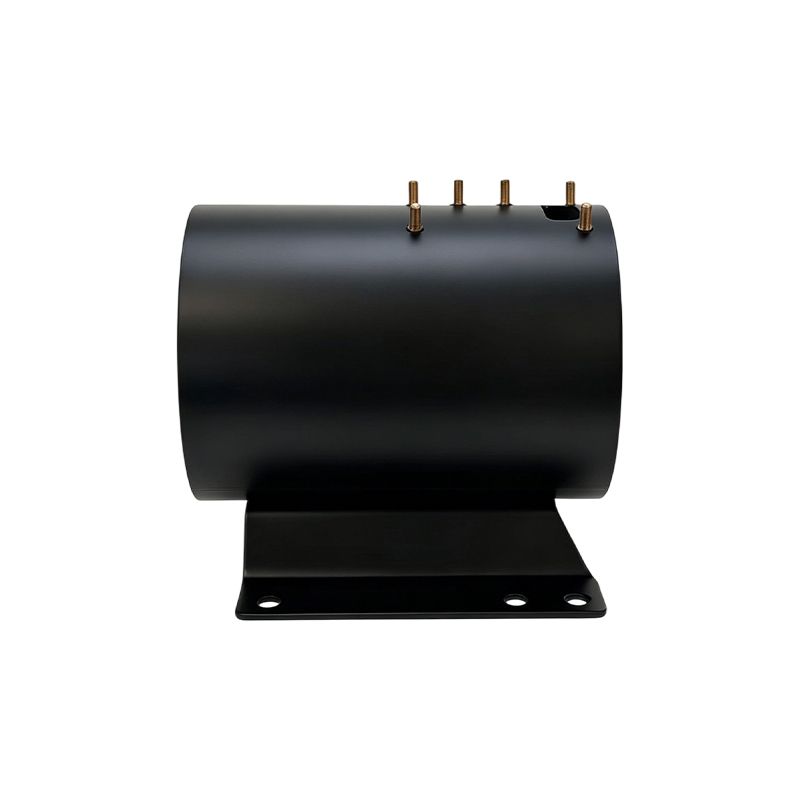
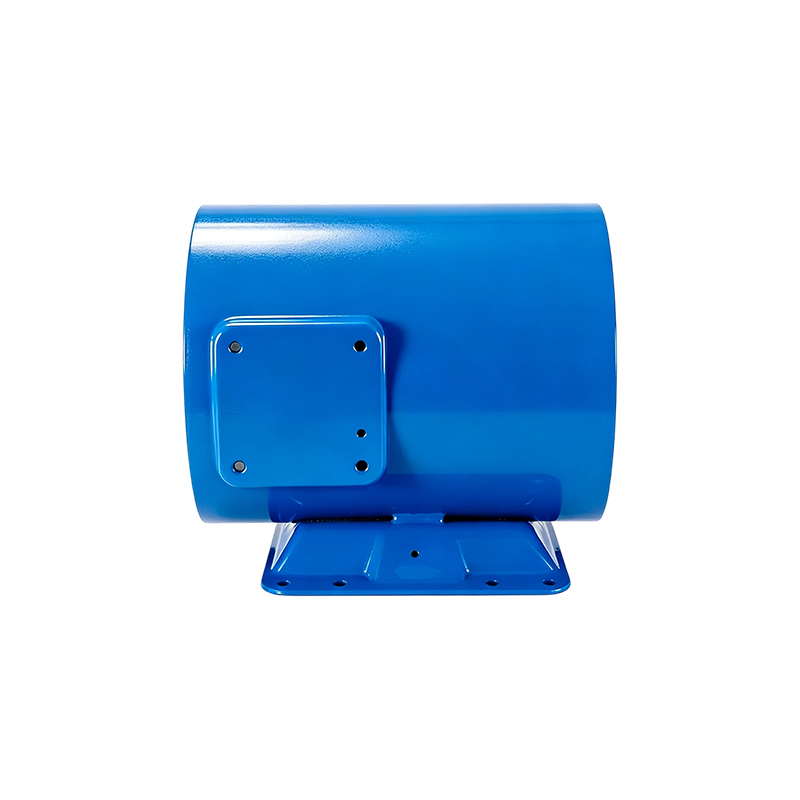 Inner Diameter 260 Heavy-Wall Motor Housing With BaseA 5mm-wall steel housing with welded terminal block, lifting lug and mounting foot, suited to large industrial and heavy-duty motors. It appears where thermal-matched welded steel and late re-machining matter.View Product →
This is the lane occupied by housing specialists such as Jiangsu Yufeng Electric Co., Ltd., a manufacturer with 40 years in steel motor enclosures, in-house stamping, welding, machining and surface treatment, and reported annual capacity above five million units. Buyers who want the full supplier-side picture can work through this steel motor housing buyer guide before shortlisting partners.
Specify aluminum when
- Range targets make every kilogram count
- Annual volumes justify casting tooling
- Liquid cooling jackets must be cast in
- Thin, complex geometry is required
Specify steel when
- Volumes are moderate or program life is short
- Shock, vibration or external loads are high
- Mounting bases, brackets and serviceability matter
- Design revisions are expected after launch
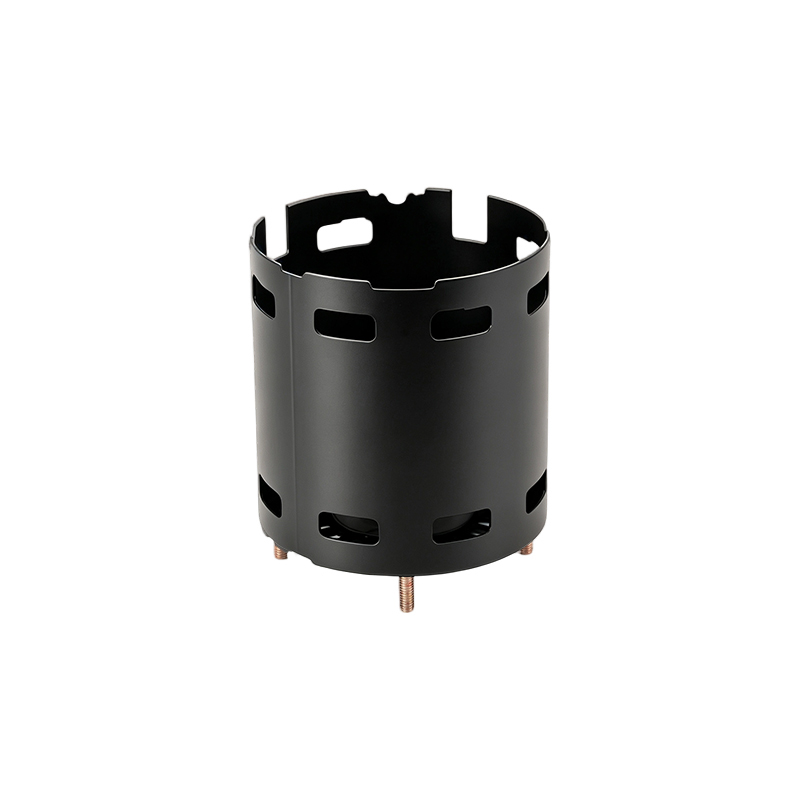
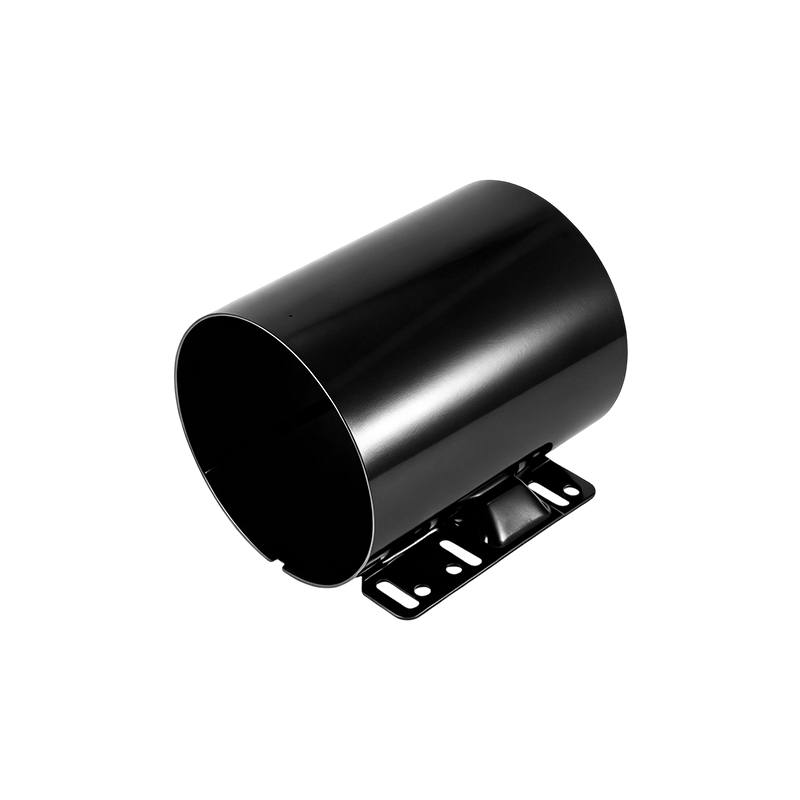
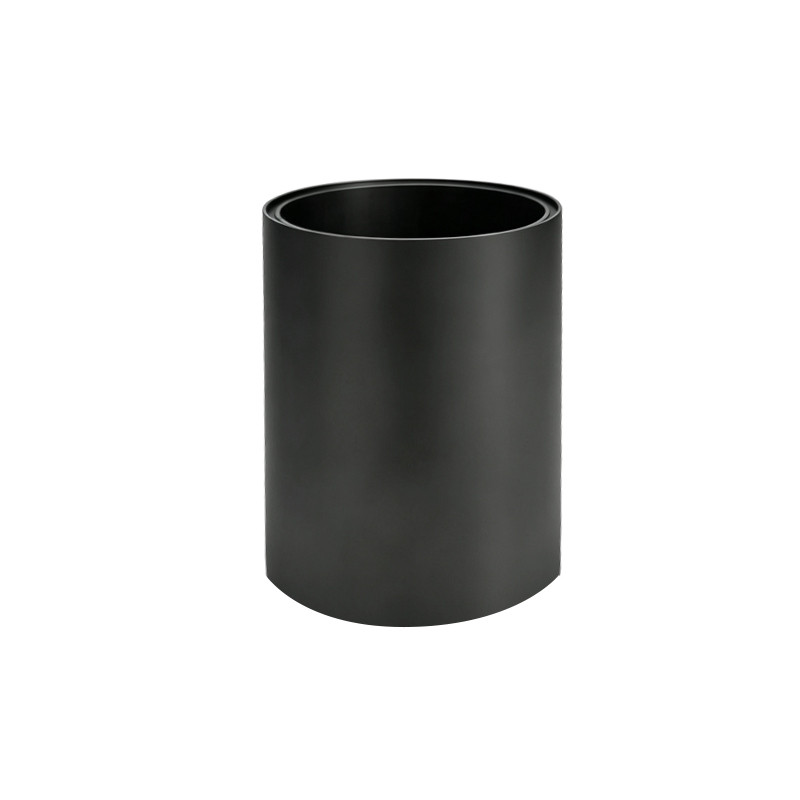 Inner Diameter 127 Heavy-Wall Motor HousingMade from seamless steel tubing with a 7.9mm wall, this housing offers high rigidity, torsional strength and fatigue resistance for demanding industrial duty, bridging the discussion of supplier capability and material choice.View Product →
304 Stainless Steel Housings for Coolant and Corrosion
When the enemy is corrosion rather than weight, 304 stainless steel ends the argument. Electrified equipment motors increasingly sit beside glycol coolant loops, battery packs and underbody splash zones. A coated carbon steel housing fails the moment its coating is scratched, while 304 stainless, with roughly 18 percent chromium and 8 percent nickel, rebuilds its passive oxide layer and keeps protecting after scratches and welds.
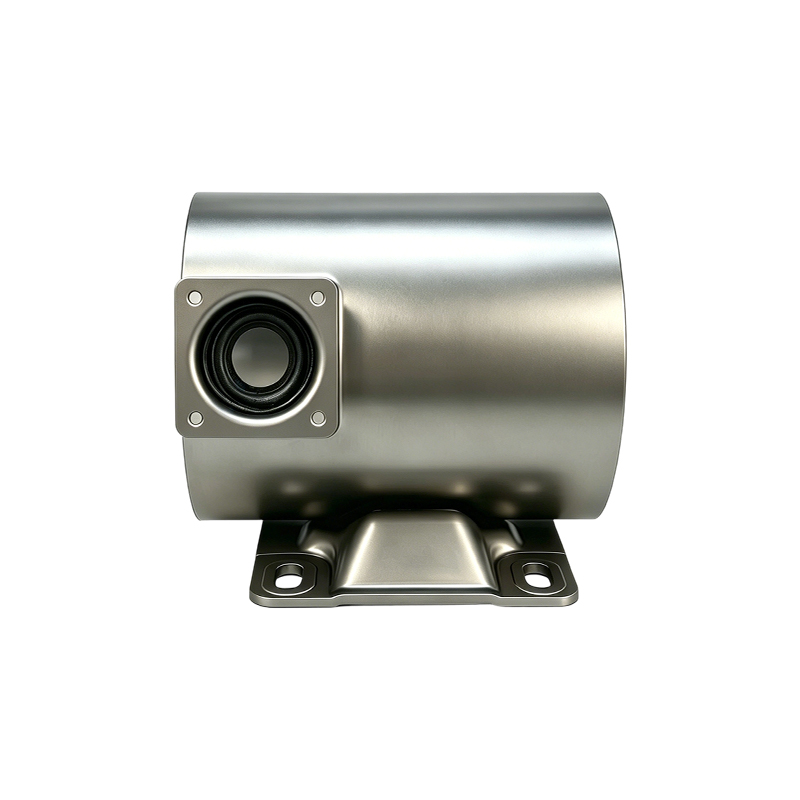
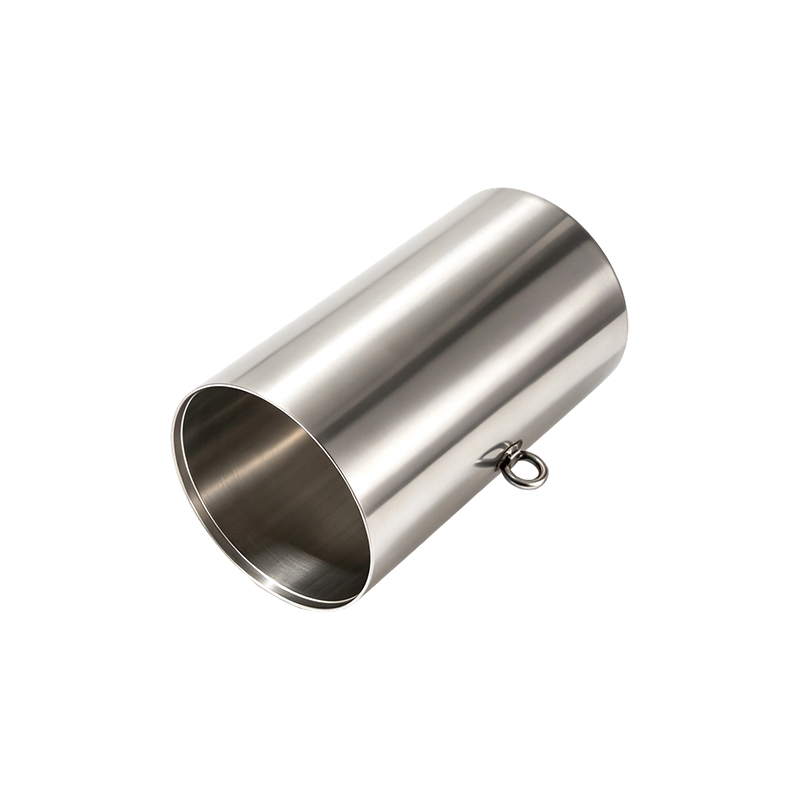 Inner Diameter 180 304SS Motor HousingA 304 stainless housing with 3mm wall and welded lifting lug that resists humidity, acids, alkalis and salt spray. Ideal for wet or corrosive service, where corrosion margin outweighs stainless's lower thermal conductivity.View Product →
The trade-offs are real. Stainless 304 conducts only about 16 W/mK, roughly a third of carbon steel, and weighs the same 7.9 g/cm3, so designers compensate with fins, added surface area or forced airflow. That is why 304 appears most often on auxiliary motors, pumps and equipment in wet or corrosive service, where its corrosion margin outweighs its thermal penalty.
The number that decides where 304 stainless belongs: anywhere corrosion protection outweighs heat spreading, from coolant-adjacent pump motors to washdown and outdoor equipment.
For a deeper walkthrough of grades, finishes and sealing strategy, see this stainless motor housing guide to corrosion-proof motor design.
EV Motor Housing Materials: Quick Comparison and Selection Checklist
The table compresses the trade-offs into one view, and the checklist turns them into a process your program can actually run.
| Material | Density (g/cm3) | Conductivity (W/mK) | Corrosion resistance | Relative cost | Typical EV duty |
| Die-cast aluminum (ADC12/A380) | 2.7 | 96-110 | Good with coatings | Medium-high | Traction motors |
| Carbon steel, stamped and welded | 7.85 | About 50 | Requires coating | Low | Auxiliary, fan and pump motors |
| 304 stainless steel | 7.9 | 16 | Excellent | High | Wet, corrosive and washdown duty |
| Heavy-wall steel | 7.85 | About 50 | Requires coating | Low-medium | High-load equipment drives |
Before locking a material, run this sequence:
- Map the thermal path first: continuous versus peak load, and whether coolant contacts the housing or heat must reach ambient air alone.
- Price the corrosion strategy: coating and testing costs against the stainless premium over the full service life.
- Count units per year: casting dies amortize at high volume, while stamping and welding tooling stays economical far lower.
- Check integration loads: mounting bases, brackets and external forces decide when heavy-wall construction is required.
- Audit the supplier process chain: stamping, welding, machining and surface treatment under one roof shortens correction loops when tolerances drift.
FAQ: EV Motor Housing Materials
Can steel replace aluminum in an EV traction motor housing?
It can, and some commercial-vehicle and industrial programs do, but passenger-car traction programs almost always stay with aluminum because housing mass sits on the range side of the ledger. Steel appears where shock loads, cost ceilings or production volumes favor it.
Does the housing material change motor efficiency?
Not directly, but it changes operating temperature, and temperature changes copper resistance. A housing that conducts heat better lowers winding temperature, which reduces losses and lets the motor hold continuous power longer. Efficiency maps are usually quoted at fixed temperature for this reason.
Why is 304 stainless rare in traction motors but common elsewhere?
Because its 16 W/mK conductivity and 7.9 g/cm3 density are the wrong trade at traction scale, where both heat and mass are amplified. In smaller auxiliary motors the absolute penalties are tiny, while the corrosion benefit is large.
What accuracy can a welded steel housing achieve?
Forming and welding set the rough geometry, but final bearing bores and mounting faces are machined after welding. Well-run suppliers hold machined bearing seats to a few hundredths of a millimeter, which is why the process chain, not the material alone, decides precision.
 Previous