

 English
 Español
Content
- 1 Why EV Motor Housing Cooling Starts at the Housing Itself
- 2 Inside a Jacketed Housing: Water Jackets and Cooling Channels
- 3 How Direct Oil Cooling Changes EV Motor Housing Cooling Requirements
- 4 Material and Wall Thickness Decisions in EV Motor Housing Cooling
- 5 What Buyers Should Lock Down Before Ordering a Cooled Housing
- 6 Cooled Motor Housings: Frequently Asked Questions
A 150 kW traction motor that delivers 142 kW at the shaft dumps the remaining 8 kW as heat into a stator stack smaller than a shoebox. Industry analyses attribute 30 to 40 percent of permanent magnet motor failures to excessive temperature rise, and nearly all of that heat has to leave through one component: the housing. That is why EV motor housing cooling has shifted from a late-stage detail to a discipline that decides whether a motor hits its power density target or derates on the test bench.
This guide walks through the cooling architectures that route heat through the housing, the material and wall thickness trade-offs behind them, and the measurable specifications a buyer should fix before releasing drawings to a housing supplier.
Why EV Motor Housing Cooling Starts at the Housing Itself
The housing is the largest single heat sink attached to the stator, so its geometry, wall thickness and machining quality set the ceiling on how much heat the motor can shed.
Heat generated in the copper windings and the rotor must cross a chain of interfaces before it reaches coolant: winding insulation, the lamination stack, the press fit between stack and housing bore, the housing wall, and finally the channel surface. Varnish, trapped air and oxide layers are poor conductors, so every interface adds thermal resistance. A badly machined bore or an uneven press fit can trap heat no matter how generously the cooling jacket is dimensioned.
The housing also carries mounting brackets, end shield interfaces, sensor bosses and seals. Cooling features have to coexist with all of them, which is why housing cooling is inseparable from housing manufacturing: every channel, fin and port must be formed, machined and leak tested in production, not just drawn in CAD.
Indirect cooling: a cooling layout in which coolant flows through channels formed in or around the motor housing wall and removes stator heat by conduction, without touching the windings directly.
Inside a Jacketed Housing: Water Jackets and Cooling Channels
Most production EV traction motors cool indirectly: a water-glycol mixture circulates through a jacket integrated into the housing wall.
Coolant enters through ports in the housing, travels along channels that wrap the stator, and exits toward the radiator. Axial channels run parallel to the shaft and are simpler to machine, while spiral channels wrap around the bore to even out the circumferential temperature profile. Published research on dual-channel housings shows the two can be combined, so one circuit prioritizes the hottest zone near the winding overhang while a second carries base load.
Axial versus spiral routing in practice
For a housing supplier, the jacket decides the process route. Cast aluminum housings form channels during casting; fabricated and machined housings build them from machined pockets, covers and welded ports. Either way, every jacket becomes a small pressure vessel that must pass proof testing without weeping glycol into the lamination stack. Lower-power motors in the same vehicle, such as blower and pump drives, still rely on air cooling across finned or ventilated housings, which keeps airflow-friendly housing features in demand too.
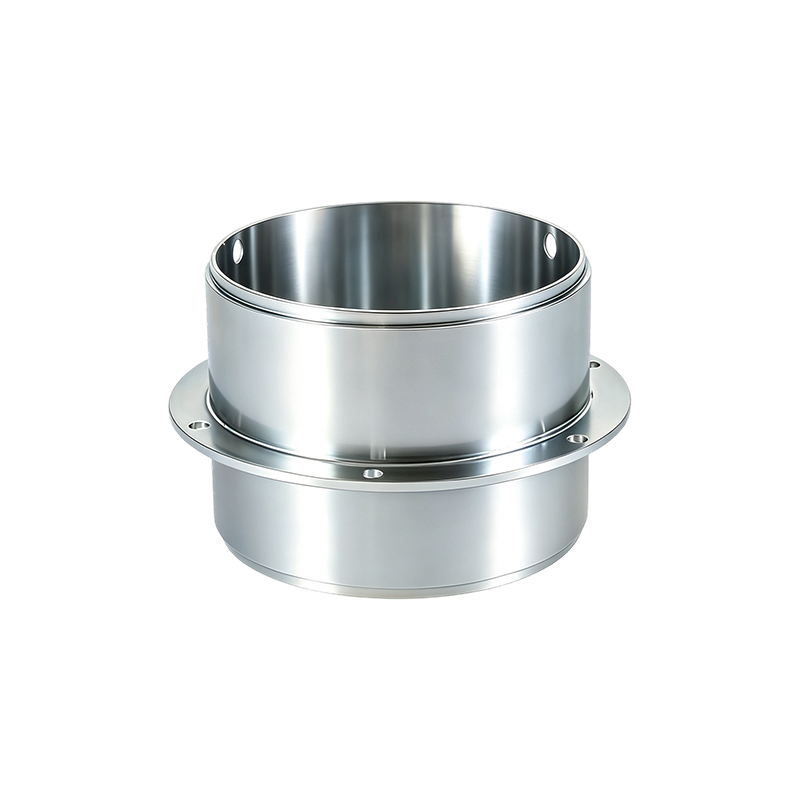 Fan Motor HousingThis fan motor housing features a precision-engineered structure with an inner diameter of 130mm, offering uniform wall thickness and precise dimensions, providing a s...View Product →
Indirect water-glycol jacket
- Coolant never enters the motor chamber
- Housing wall carries the thermal load
- Low sealing risk, easy to service
- Depends on bore press-fit quality
Direct oil cooling
- Dielectric oil sprays windings and rotor
- Highest heat pickup at the source
- Needs an oil-tight housing and seals
- Oil still rejects heat via a liquid loop
Rule of thumb: over the same surface, a liquid circuit moves heat up to 50 times more effectively than air, which is why jacketed housings dominate once continuous losses climb above a few kilowatts.
How Direct Oil Cooling Changes EV Motor Housing Cooling Requirements
Direct oil cooling moves the coolant onto the windings and rotor, yet it does not remove the housing from the thermal path.
In oil-cooled drive units, dielectric fluid is sprayed or flooded over the end windings and rotor surfaces, capturing heat where it is generated. That oil then passes through a heat exchanger, where a water-glycol circuit absorbs the energy and carries it to the radiator. The housing still hosts that secondary circuit, still seals the oil inside the motor chamber, and still sets the conduction path from the stator core outward.
For buyers this shifts the specification list. Housing joints and seals must hold oil at operating temperature, materials and coatings must tolerate long exposure to transmission fluids, and bore machining quality matters even more than usual, because oil cooling bypasses only part of the thermal path. With flat-wire stators pushing slot fill and losses upward, many new programs run both systems at once: oil at the source, a jacket in the housing wall.
Material and Wall Thickness Decisions in EV Motor Housing Cooling
Material choice fixes the housing's thermal conductivity, and wall thickness decides how much room is left for channels, so the two must be chosen together.
Die-cast aluminum stays the default for high-volume traction housings because it conducts heat several times better than steel and casts complex jackets cheaply. Steel and stainless housings earn their place where strength, dimensional stability, corrosion resistance or moderate series volumes dominate. The conductivity penalty is real but manageable, because in a jacketed design the convection film at the coolant interface and the contact resistance at the stator fit often contribute as much resistance as conduction through the wall itself.
Compensating for lower conductivity with geometry
When a program specifies steel or 304 stainless, for example where coolant chemistry, washdown exposure or long service life make corrosion resistance decisive, designers compensate with geometry rather than accepting the loss:
- Thinner walls between the housing bore and the channel floor, within pressure limits
- More channel contact area through spiral routing or a second circuit
- Controlled press-fit interference so the lamination stack seats with uniform contact
- Thermally conductive interface compounds at every metal-to-metal joint
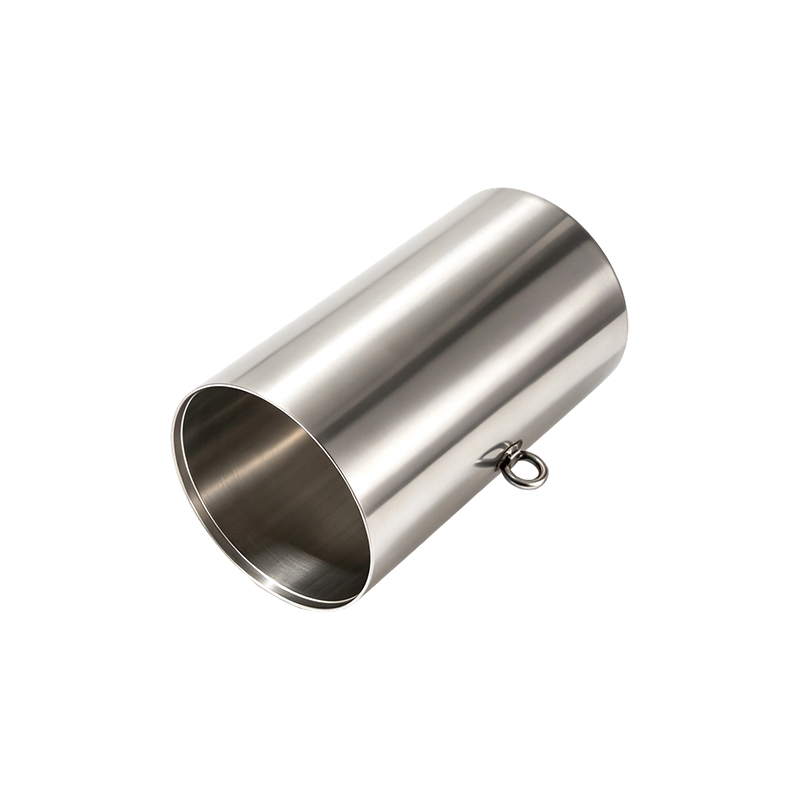 Inner Diameter 180 304SS Motor HousingThis stainless motor housing features a reinforced structural design with an inner diameter of 180mm, height of 320mm, and a wall thickness of 3mm. It is manufactured ...View Product →
Wall thickness pulls in the opposite direction. Heavy-wall steel tube housings leave generous material for deep channels and high proof pressures, which suits industrial EV drivetrains and off-highway duty cycles, yet every extra millimeter of wall adds conduction resistance. The channel floor should sit as close to the bore as strength allows.
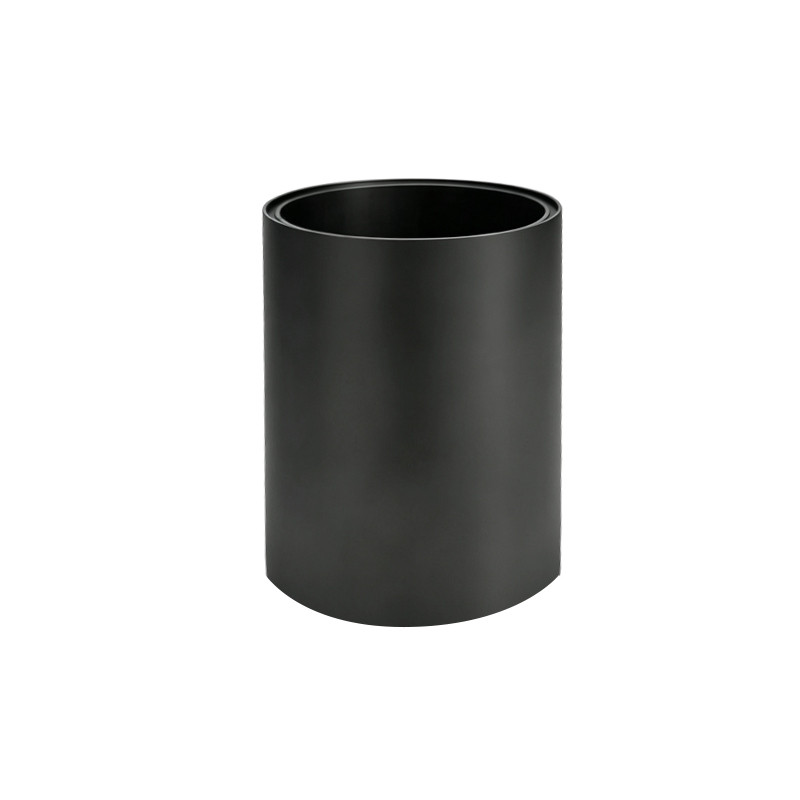 Inner Diameter 127 Heavy-Wall Motor HousingThis motor housing is precision-crafted from high-quality seamless steel tubing. With an inner diameter of 127mm and a wall thickness of 7.9mm, it delivers both precis...View Product →
For a deeper look at corrosion-resistant designs, see our stainless motor housing guide.
In a jacketed housing, the coolant-side film and the stator press fit often contribute more thermal resistance than the wall itself, which is why machining quality can matter more than alloy choice.
What Buyers Should Lock Down Before Ordering a Cooled Housing
Cooling performance is decided on the drawing long before the first chip is cut, so buyers should freeze a short list of measurable specifications with the supplier.
| Specification | Why it matters | Practical target |
| Bore size and roundness | Sets press-fit quality between the stator stack and housing | IT7 grade or better, roundness within 0.02 mm |
| Channel geometry | Controls flow velocity, pressure drop and temperature uniformity | Flow-verified spiral or axial layout |
| Jacket pressure integrity | Prevents glycol weeping into the lamination stack | 100 percent leak tested, proof at twice working pressure |
| Mounting face flatness | Keeps end shields sealed and bearings aligned | Within 0.05 mm across the face |
| Surface treatment | Must protect against corrosion without adding insulation | Thin, thermally conductive coatings only |
Then ask for evidence rather than assurances. A capable housing manufacturer should hand over four things without hesitation:
- Material certificates and coating thickness reports
- Leak test records for the jackets, tied to unit serial numbers
- CMM reports covering bore diameter, roundness and channel floor thickness
- First article inspection aligned to your stator's actual fit data
This is where an integrated manufacturer earns its keep. Jiangsu Yufeng Electric Co., Ltd. has spent four decades producing steel, stainless, heavy-wall and steel tube motor housings, with stamping, welding, machining and surface treatment under one roof, an engineering team averaging more than 20 years of experience, and annual capacity above five million units. For programs that need cooled housings developed alongside the motor, that vertical integration shortens the loop between a design change and a leak-tested sample.
A housing supplier who machines, welds and pressure-tests jackets in-house can turn a channel redesign around in days. One who subcontracts those steps cannot promise the same.
Cooled Motor Housings: Frequently Asked Questions
Can a steel or stainless housing cool an EV motor as well as aluminum?
Yes, when the cooling design compensates. Steel conducts roughly one third as well as aluminum, so steel housings rely on thinner channel walls, more channel area and tighter press fits. In jacketed designs, convection and contact resistance often dominate anyway, so a well-machined steel jacket can match a mediocre aluminum one.
Is direct oil cooling making the housing jacket obsolete?
No. Oil cooling captures heat at the windings and rotor, but the oil still dumps that heat into a water-glycol circuit through a heat exchanger. Most high power density programs combine both methods: oil at the source, a jacket in the housing wall.
How much heat can a water-jacketed EV motor housing remove?
It depends on coolant flow rate, channel area and interface quality rather than housing material alone. Liquid circuits dissipate heat up to 50 times more effectively than air over the same surface, which is why jacketed housings dominate above a few kilowatts of continuous loss.
What should I send a housing supplier first when starting an EV cooling project?
Start with the stator outer diameter and fit strategy, continuous loss figures, coolant type and flow rate, available pressure drop, and environmental requirements. With those numbers, a supplier can propose channel layout, wall thickness and a test plan before quoting.
 Previous