

 English
 Español
Content
- 1 Why Electrophoretic Coating Is Specified for Steel Motor Housings
- 2 The Four-Stage E-Coat Process: From Pretreatment to Cure
- 3 Film Thickness, Standards, and What a Buyer Should Specify
- 4 Resin Selection for Motor Housing E-Coat: Epoxy, Acrylic, or Hybrid
- 5 Electrophoretic Coating vs. Powder Coating: What Changes for the Buyer
- 6 Auditing a Supplier's E-Coat Line Before You Order
- 7 Frequently Asked Questions
Earlier this year, a European pump manufacturer rejected 3,000 stamped steel motor housings after a 240-hour salt spray test. The stator bore, fin gaps, and the pocket behind the cable grommet showed red rust lines, while external faces looked flawless. The spray booth had coated every surface a gun could see and missed every surface it could not.
The result is a uniform, tightly bonded film that beats spray-applied primer on salt spray resistance, edge coverage, and material utilization. The sections below cover the process stages, the numbers to put in an RFQ, and the audit points that separate a controlled e-coat line from a dip tank with ambitions.
Why Electrophoretic Coating Is Specified for Steel Motor Housings
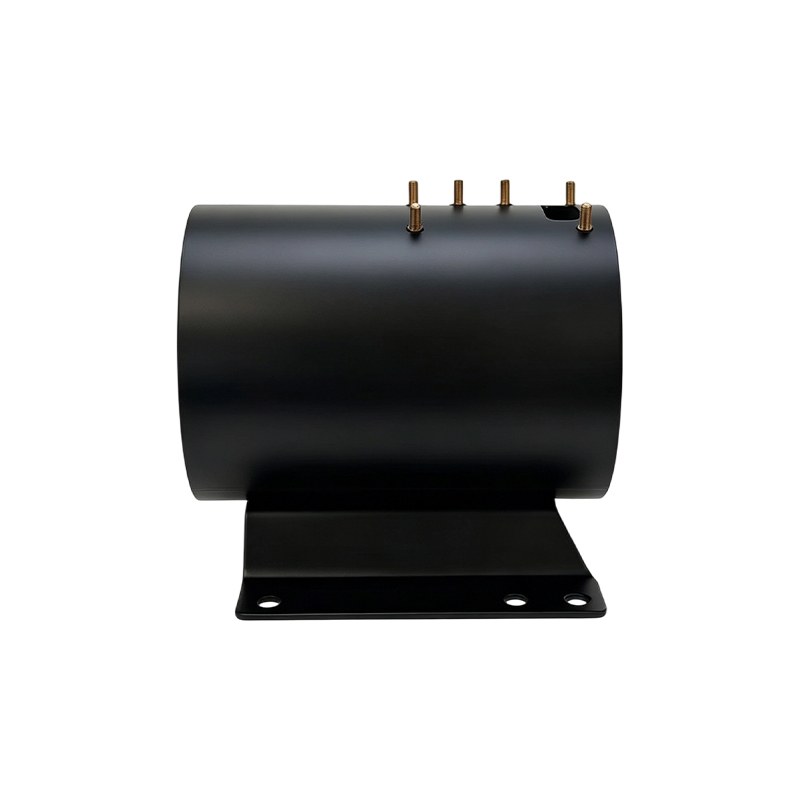
E-coat is specified for motor housings because corrosion starts inside, not outside. A stator bore sees condensation in every thermal cycle: the motor heats during a duty cycle, then cools and pulls humid air into the housing cavity. Once moisture sits on an uncoated bore, red rust forms, and loose oxide particles migrate toward the bearing chamber and the rotor air gap.
Electrophoretic coating removes that root cause: the electric field pulls paint into the bore, behind stress ribs, and along the weld seam, holding film thickness within about 5 microns across the part. Spray application swings by 20-40 microns between flat faces and edges.
A typical steel motor housing in the 100-160 mm bore range is the best e-coat qualification baseline, because its bore length-to-diameter ratio matches larger industrial frames.
The Four-Stage E-Coat Process: From Pretreatment to Cure
Every e-coat failure - blistering, pinholes, poor adhesion - traces to one of four process stages. A housing can pass a visual audit and still fail in the field if pretreatment bath conductivity drifts outside its window.
- Pretreatment. Alkaline degreasing removes stamping oils, followed by counterflow rinses and a zinc phosphate or zirconium conversion coating. Final rinse conductivity below 5 microsiemens/cm is the acceptance limit.
- Immersion. The housing is submerged in the bath, typically 18-22 percent solids for cathodic epoxy. DC voltage of 150-300 V deposits the film; energized time controls thickness at about 1.5-2.5 microns per second.
- Ultrafiltration rinse. Closed-loop ultrafiltration rinses recover paint and wash the uncured film without dissolving it. A blocked membrane shows up as drag-out stains and rising bath conductivity.
- Cure. The film cross-links at 170-180 deg C for 20-30 minutes. Undercure leaves a soft film; overbake embrittles the polymer.
| Stage | Key control parameter | Failure mode if off-spec |
| Pretreatment | Final rinse conductivity below 5 microsiemens/cm | Poor adhesion, film delamination |
| Immersion | Bath solids 18-22 percent, voltage 150-300 V DC | Pinholes, uneven film build |
| UF rinse | Permeate flow and pressure balance | Drag-out stains, bath fouling |
| Cure | Metal temperature 170-180 deg C for 20-30 min | Soft film or overbake embrittlement |
Film Thickness, Standards, and What a Buyer Should Specify
Specify 18-25 microns minimum film on external faces, 10-15 microns inside bores, and verify with salt spray and crosshatch adhesion. Every target below is paired with its test standard.
The same standards apply across sizes. Heavy-wall housings above 260 mm bore need film mapping over the full bore length; draft angle at the flange is where thickness errors appear first.
 343mm ID Heavy-Wall Motor Housing with Base and Welded Lifting LugDesigned for extra-large industrial motors, this housing offers 6mm wall thickness, welded terminal block, and mounting foot for stable support in demanding applications like mining and marine propulsion.View Product →
| Property | Target value | Test method |
| Dry film thickness | 18-25 microns external; 10 microns minimum in bore | Eddy current per ISO 2808 |
| Crosshatch adhesion | No removal at 0 mm spacing | ASTM D3359 |
| Salt spray red rust | No red rust before 240 h | ASTM B117 |
| Pencil hardness | 2H minimum | ASTM D3363 |
The map below comes from a welded 140 mm bore housing on a controlled cathodic epoxy line:
If the bore is machined after coating, film values have zero effect on press-fit tolerances. If the coated bore is the fit surface, subtract the measured film from the interference allowance and run a press-fit test with coated samples.
Resin Selection for Motor Housing E-Coat: Epoxy, Acrylic, or Hybrid
Specify cathodic epoxy as the default, acrylic only when color or UV stability is a hard requirement, and hybrid systems when one line must satisfy both corrosion and cosmetic targets.
Best corrosion resistance and adhesion; available only in black and dark gray. Used in roughly 90 percent of motor housing applications because it passes 240 h salt spray at 20 microns.
Better UV and color retention with higher gloss, but lower corrosion performance. Chosen when the housing stays visible without a topcoat, typically in appliance motors.
Intermediate corrosion and color performance. Used when a single oven processes mixed parts and the line cannot run two bath chemistries.
For heavy-wall steel motor housings exposed to washdown chemicals and road salt, the motor housing electrophoretic coating specified is usually a 25-30 micron cathodic epoxy build with salt spray results above 400 hours. Wet-duty pump motors using steel tube housings follow the same rule; a tube body has no sharp edges, so the film stays uniform around the circumference.
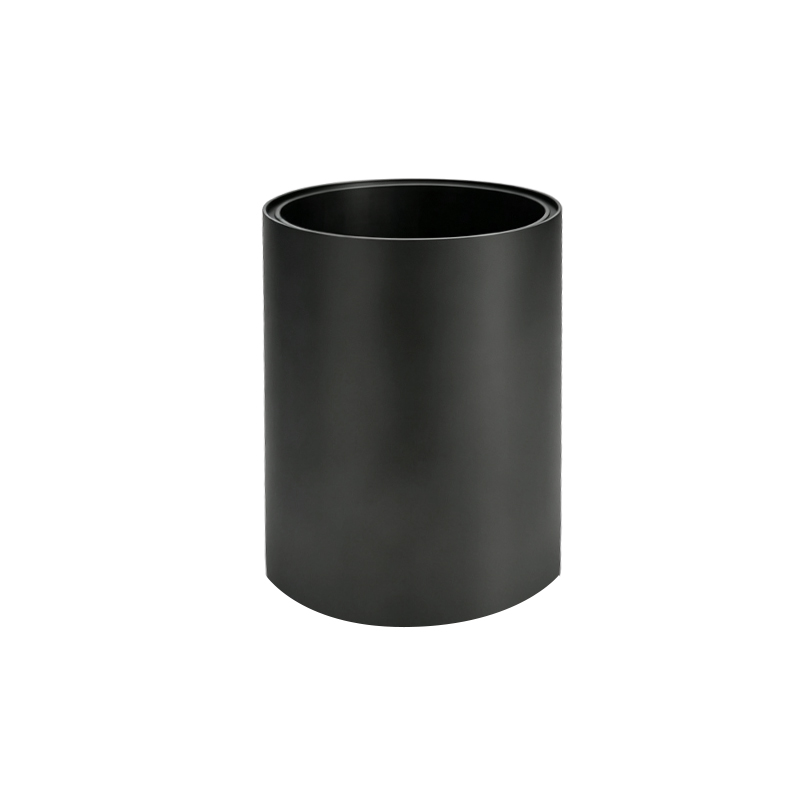 127mm ID Seamless Steel Tube Heavy-Wall Motor HousingPrecision-crafted from seamless steel tubing with 7.9mm wall thickness, this housing provides superior structural rigidity and fatigue resistance, ideal for heavy-duty industrial settings requiring durability and torsional strength.View Product →
Electrophoretic Coating vs. Powder Coating: What Changes for the Buyer
E-coat wins on internal coverage and film uniformity; powder wins on external film build, impact resistance, and color range. On motor housings the two are often combined.
- Immersion reaches every internal cavity
- 15-25 micron film, uniform within 5 microns
- Excellent edge and weld seam coverage
- About 95 percent material utilization
- Narrow color range: black and dark gray
- Spray, line-of-sight coverage only
- 60-120 micron film for impact resistance
- Thick, tough external surface
- Overspray reduces efficiency
- Wide color and texture range
A common pattern is an e-coat base layer plus a powder topcoat on the exposed external face: the bore gets full corrosion protection, and the outside face gets a thicker, scratch-resistant, color-matched finish.
Auditing a Supplier's E-Coat Line Before You Order
Audit the bath, not the brochure. Ask for titration logs, conductivity records, and film maps from the last 30 production days; treat a single salt spray certificate as documentation, not proof.
A manufacturer such as Jiangsu Yufeng Electric Co., Ltd., which runs the full process from steel forming to surface treatment in one plant, can document the bath and pretreatment history for every production day.
- Pretreatment chemistry logs: phosphate or zirconium concentration and sludge records
- Final rinse conductivity below 5 microsiemens/cm
- Bath solids, pH, temperature, and conductivity plotted over the last 30 shifts
- Film thickness maps on production housings, with bore and rib readings
- Cure temperature profile: setpoint, belt speed, and metal temperature records
- Salt spray and adhesion reports from the same bath chemistry that runs your parts
A controlled line holds film thickness Cpk above 1.33. An uncontrolled line swings by 10 microns or more between batches, and those swings correlate directly with warranty returns in humid or washdown duty.
Frequently Asked Questions
How long does electrophoretic coating protect a motor housing?
In indoor service, a 20-25 micron cathodic epoxy e-coat on a properly pretreated steel housing prevents red rust beyond 240 h in ASTM B117 and for years indoors. Outdoor or washdown duty requires a thicker film or a powder topcoat.
Does e-coating affect press-fit tolerances on the stator bore?
If the bore is machined after coating, e-coat has no effect on the fit. If the coated bore is the fit surface, subtract the 10-15 micron film from the interference allowance and run a press-fit test with coated samples.
Can e-coating be applied to stainless steel motor housings?
E-coat adheres to stainless steel after pretreatment, but it is rarely specified on 304 stainless motor housings because the metal already resists corrosion. It is used only when galvanic isolation, color, or a uniform finish is required.
What does e-coating add to the cost of a steel motor housing?
On a 100-160 mm bore housing, e-coat adds 3-8 percent to part cost, depending on volume, film thickness, and whether the line runs in-house. Material utilization near 95 percent keeps it below spray-applied primer.
 Previous