

 English
 Español
Content
- 1 What a Motor Housing Does in Air Conditioner Motors
- 2 Bore Sizes That Match Air Conditioner Motor Designs
- 3 Choosing Housing Materials: Steel, Stainless or Heavy Wall
- 4 How a Stamped Motor Housing Is Made in Four Stages
- 5 Ordering Motor Housings for Air Conditioner Motors: A Buyer Checklist
- 6 Frequently Asked Questions
A condenser fan motor in a residential split system spins at roughly 850 to 1,100 rpm for thousands of hours each cooling season, wrapped in a rolled steel cylinder that most people never see. That cylinder, the motor housing for air conditioner motors, decides how quietly the unit runs, how efficiently the windings shed heat, and whether the rotor stays centered for a decade or starts rubbing the stator within a few years. It is a manufacturing decision long before it is a service one. This guide explains what the housing does, which bore sizes and materials fit common air conditioner motor designs, how stamped housings are made, and what to verify before ordering.
What a Motor Housing Does in Air Conditioner Motors
The motor housing in an air conditioner motor is the structural cylinder that holds the stator stack, aligns the rotor air gap, carries the mounting load, and moves winding heat into the surrounding airflow. Every other performance trait, from noise to bearing life, depends on those four jobs being done consistently.
In air conditioner duty, the housing works harder than its plain appearance suggests:
- Alignment: bore concentricity keeps the air gap uniform around the rotor, and eccentricity shows up first as hum and vibration.
- Heat transfer: the steel shell conducts winding heat to the airstream, which is why condenser fan motors sit with their housings directly in the outdoor coil airflow.
- Mounting: stamped brackets, resilient rings and bases define how the motor attaches to the blower housing or fan grille, and set the vibration path into the cabinet.
- Protection: the shell shields windings from dust, condensate and contact, working alongside fan covers, air deflectors and junction boxes to complete the assembly.
Bore Sizes That Match Air Conditioner Motor Designs
Most air conditioner motors use housings with bore diameters between roughly 80 mm and 160 mm, and the bore is the first number a buyer should lock down because the stator fit depends on it. The stator outer diameter needs a controlled fit: too loose and the laminations buzz, too tight and the housing distorts. Production housings for fan and blower motors cluster around a few standard bores, each mapped to a typical role.
The same bore usually appears in several mounting variants, with two or three stamped brackets, a welded base, or flexible structures that simplify assembly on the customer line, so specify the bore and the mounting geometry as a pair rather than in sequence.
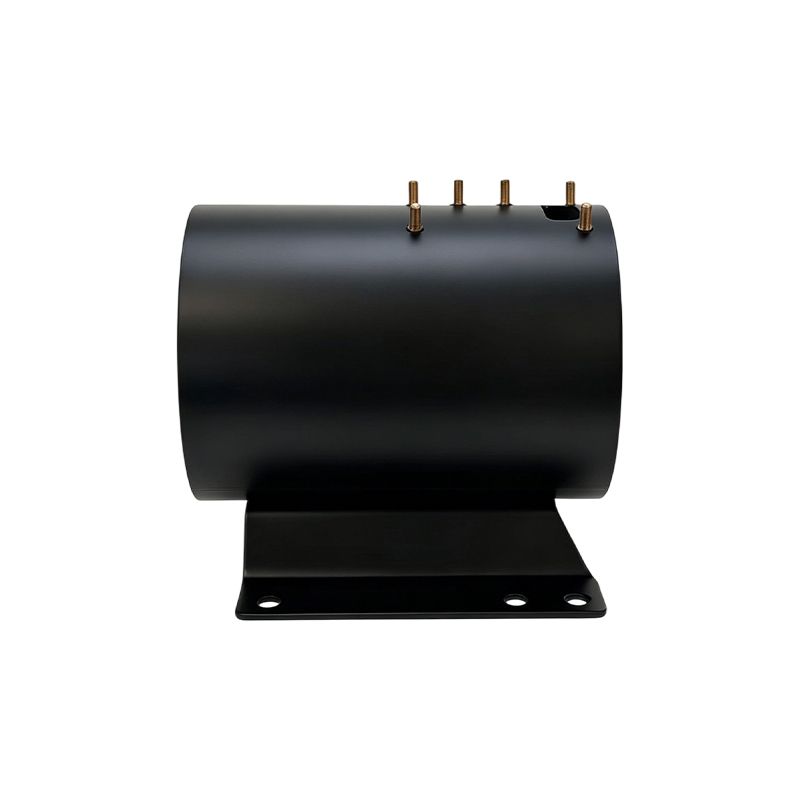
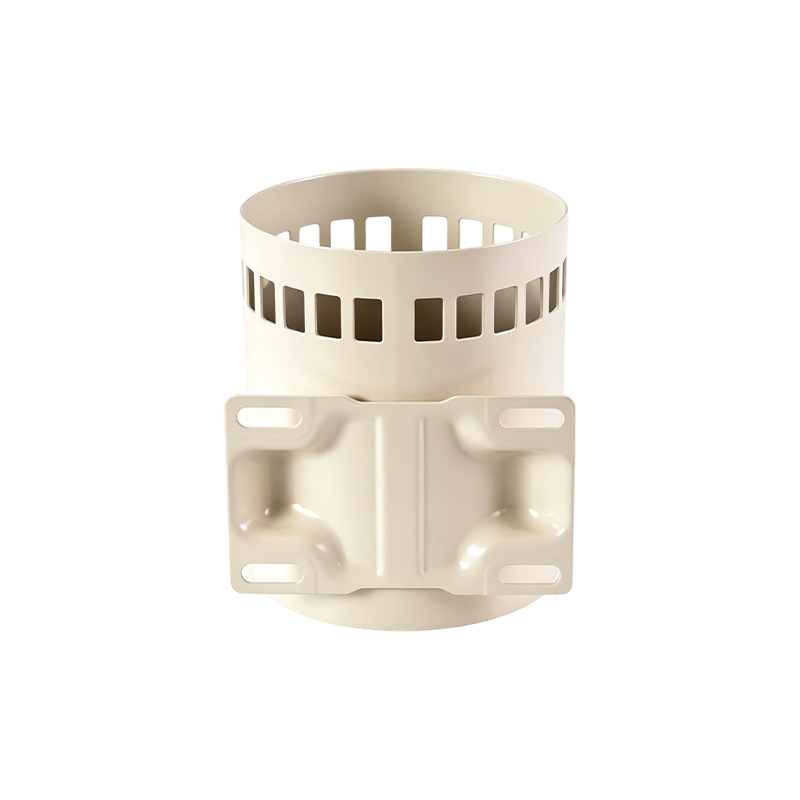 Inner Diameter 139 Steel Motor Housing With BaseThis steel motor housing features a precision-engineered inner diameter of 139mm with excellent dimensional accuracy, providing a stable and reliable protective space ...View Product →
Choosing Housing Materials: Steel, Stainless or Heavy Wall
Coated steel is the default material for air conditioner motor housings because it stamps cleanly, machines predictably and keeps unit cost low; 304 stainless and heavy-wall constructions earn their premium only in specific environments.
| Material | Catalog bore range | Corrosion behavior | Best-fit applications |
| Stamped steel sheet | 29.6 to 160 mm | Relies on zinc, e-coat or paint | Indoor blowers and condenser fans in most residential units |
| 304 stainless steel | 139 to 180 mm | Inherent corrosion resistance | Coastal installs, high humidity, frequent washdown |
| Heavy-wall steel | 260 to 343 mm | Coated, high stiffness for large frames | Large commercial fans and special equipment |
| Steel tube | 113 to 127 mm | Coated, uniform wall from tube stock | Compact frames that need extra strength |
Match the material to the installation, not to the datasheet. A condenser fan motor on a coastal building breathes salt-laden air that defeats thin coatings within a few seasons, while an indoor blower motor never needs more than a well-controlled zinc layer.
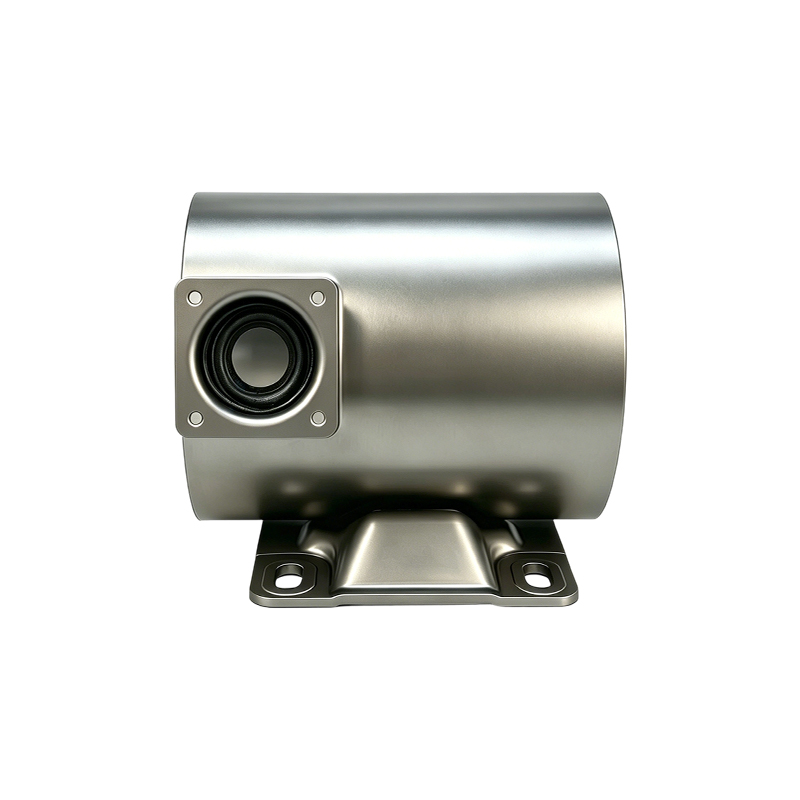
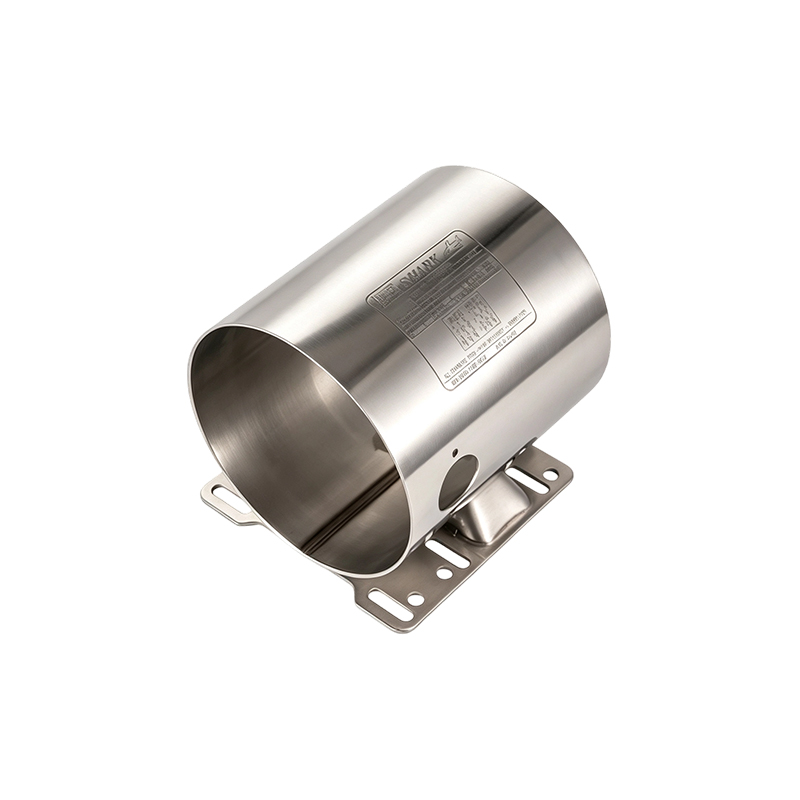 Inner Diameter 160 304SS Motor Housing With BaseThis stainless motor housing features a reinforced structural design with an inner diameter of 160mm, height of 175mm, and a wall thickness of 3mm. It is manufactured ...View Product →
How a Stamped Motor Housing Is Made in Four Stages
A steel housing for air conditioner motors moves through four production stages: stamping and forming, welding and assembly, precision machining, then surface treatment. Each stage protects a different dimension of quality.
- Stamping and forming. Coil steel is blanked, drawn and rolled into the cylinder, while bracket slots, base pads and tab features are formed in-die so their positions repeat from piece to piece.
- Welding and assembly. Longitudinal seams, brackets and bases are joined on automated welding stations; fixture accuracy here sets the roundness that the machining stage inherits.
- Precision machining. The bore and end faces are machined to final tolerance, which is where the runout and squareness that keep the air gap uniform are actually created.
- Surface treatment. Zinc plating, e-coat or paint is applied, with machined surfaces masked so critical fits stay within tolerance.
Suppliers such as Jiangsu Yufeng Electric Co., Ltd. keep stamping, automatic welding, machining and surface treatment under one roof, which removes hand-off risk between vendors and shortens the loop when a drawing change lands. For a spec-by-spec walkthrough of tolerance stacking and inspection points, see the complete steel motor housing buyer guide.
Ordering Motor Housings for Air Conditioner Motors: A Buyer Checklist
The fastest way to de-risk a housing order is to confirm five items in writing before tooling starts: bore and tolerance, mounting geometry, material and coating, mating components, and volume capacity. Scale matters as much as price, because a supplier who cannot hold volume will fail the program even if the first samples are perfect.
- Bore diameter with a tolerance band and a runout limit on the machined bore, matched to your stator fit
- Mounting geometry: base, bracket count and hole pattern referenced to your frame drawing
- Material grade and coating system, with coating thickness controlled on machined surfaces
- Mating components ordered against the same drawing set: fan covers, air deflectors, junction boxes, capacitor housings and dedicated fan motor housings
- Annual capacity, tooling ownership and response time on engineering changes
You can browse the full motor housing catalog to compare bore sizes and mounting variants side by side, then send drawings for a fit review before committing to tooling.
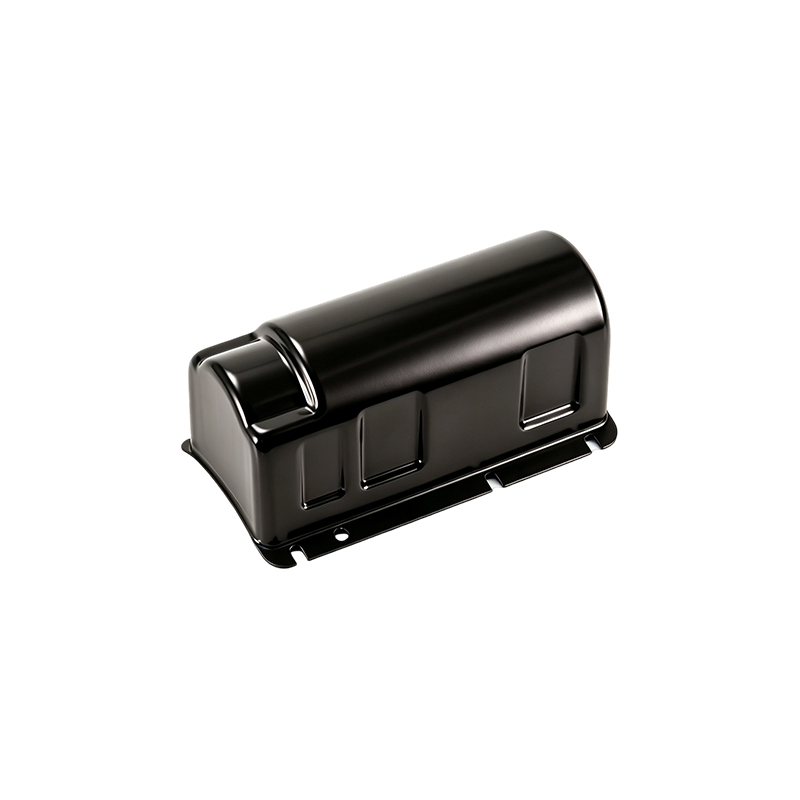
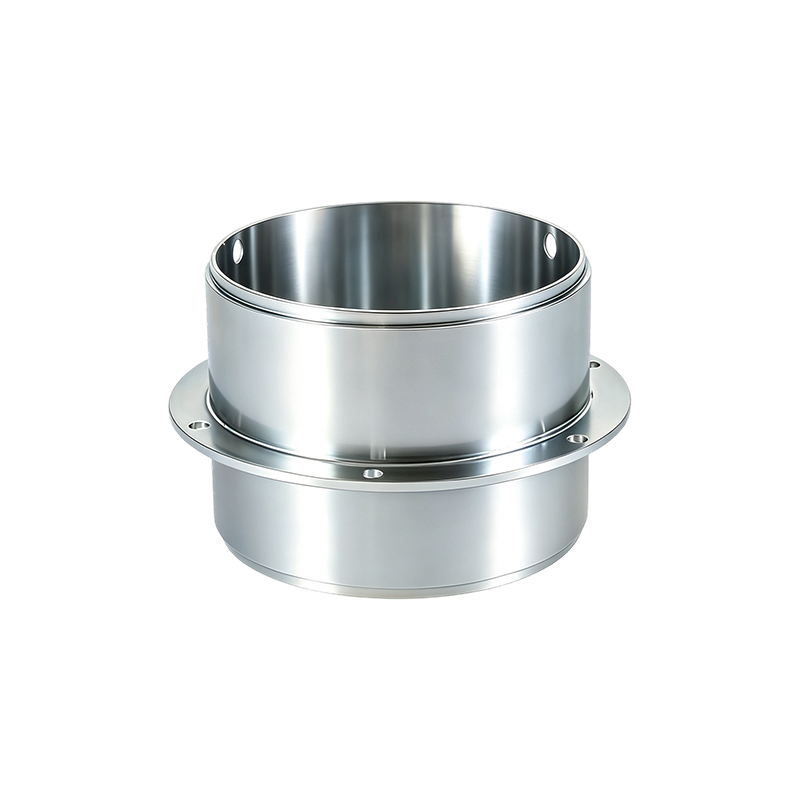 Fan Motor HousingThis fan motor housing features a precision-engineered structure with an inner diameter of 130mm, offering uniform wall thickness and precise dimensions, providing a s...View Product →
Frequently Asked Questions
What bore size do air conditioner motor housings usually use?
Most residential and light-commercial air conditioner motors use bores between roughly 80 mm and 160 mm. Common catalog sizes include 82.4, 95, 120, 139 and 160 mm, while small specialty motors go down to 29.6 mm and large commercial frames reach 343 mm in heavy-wall steel.
Is steel or stainless steel better for an AC motor housing?
For standard indoor and outdoor units, coated steel is the cost-effective default. Choose 304 stainless when the motor faces coastal salt air, constant humidity or washdown, because stainless keeps its corrosion resistance even where coatings wear away.
Can a worn motor housing make an air conditioner noisy?
Yes. If the bore loses roundness or the stator fit loosens, the air gap becomes uneven and the motor hums or vibrates. Controlling bore roundness during welding and machining the bore afterward is how manufacturers prevent the problem at the source.
How many units can a housing manufacturer supply per year?
It depends on the supplier and the size mix. A dedicated plant running in-house stamping, welding and machining can exceed five million housings per year, which matters when an air conditioner program scales across several frame sizes at once.
 Previous